
Search Florida Booking and Release Records
Florida booking releases are public records kept by county sheriff offices and the state corrections system. When someone is booked into a county jail or a state prison, that information becomes part of the public record under Florida law. You can search for booking data, release dates, and inmate status through online databases run by each county or through the Florida Department of Corrections. The state has 67 counties, and each one maintains its own jail roster. The Florida Department of Law Enforcement also keeps a central repository of criminal history information that includes booking and arrest data.
Florida Booking Records Quick Facts
Florida State Agencies
The Florida Department of Law Enforcement serves as the central repository for criminal history information across the state. FDLE's Division of Criminal Justice Information Services maintains records of arrests, bookings, and court outcomes. Anyone can request criminal history data from FDLE for a search fee. The agency is located at 2331 Phillips Road in Tallahassee. You can reach their public records office at publicrecords@fdle.state.fl.us or by calling (850) 410-7676 during business hours, which are Monday through Friday from 8 AM to 5 PM. Brittany Auclair serves as the Records Custodian for FDLE.
The state maintains an instant search portal at cchinet.fdle.state.fl.us where users can run immediate background checks. Results appear right away and can be printed or sent to your email. This service is helpful when you need booking data fast. FDLE will discontinue the use of Florida Criminal History Information Request forms via mail, so online searches have become the main method for getting this information.
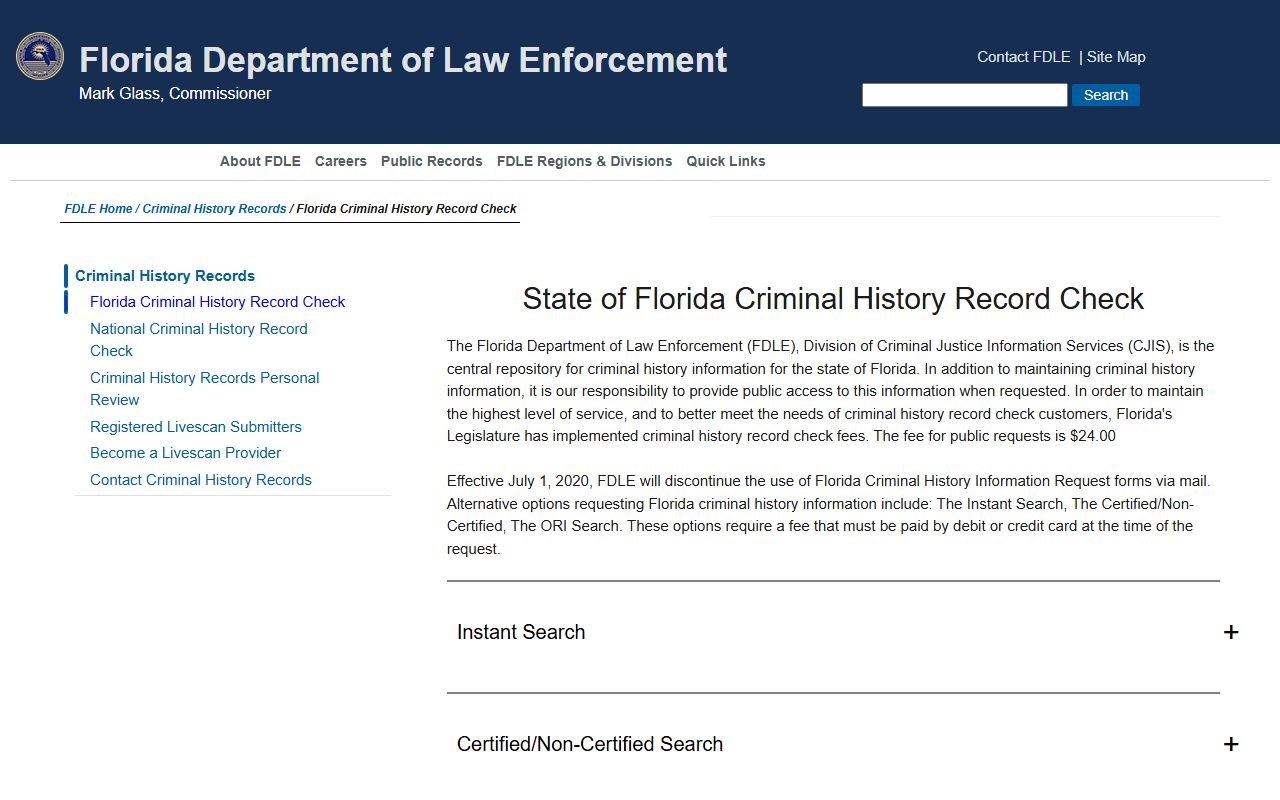
Florida's instant search tool provides access to statewide booking and arrest records compiled from local agencies. Each search costs $24.00 plus a $1.00 processing fee for credit card transactions. Results will NOT be certified, meaning they are for informational purposes only. If you need certified records for official use, you must request those through FDLE staff directly.
Department of Corrections Records
The Florida Department of Corrections handles state prison inmates. FDC keeps an offender database at pubapps.fdc.myflorida.com/OffenderSearch/search.aspx where you can look up anyone currently in state custody or released from state prison. The database shows booking dates, release dates, custody status, and the facility where an inmate is housed. This is different from county jails, which hold people awaiting trial or serving short sentences.
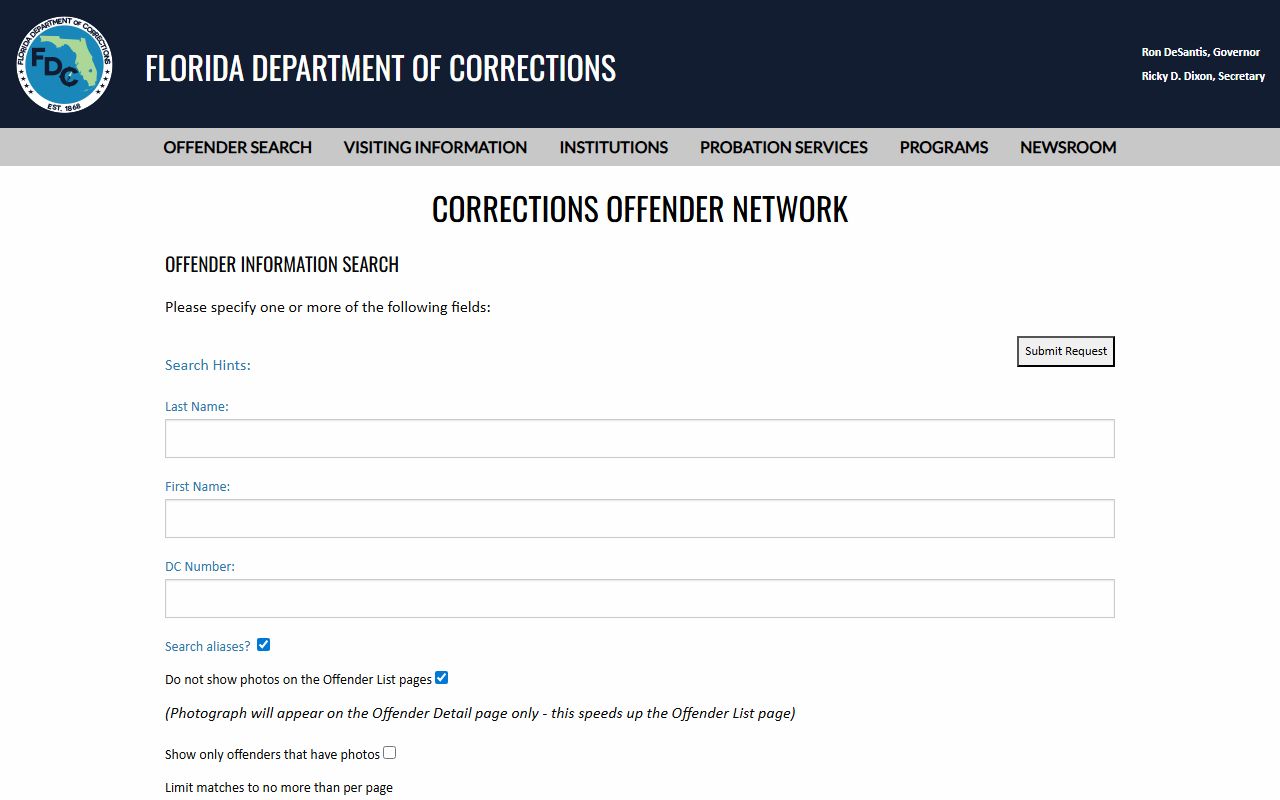
You may wish to visit the Offender Search to locate information needed to process your request before submitting a formal public records request to FDC. Inmate location, status and identifying information can be found through the online search tool.
FDC processes public records requests in accordance with Chapter 119, Florida Statutes and Section 945.10, F.S. The Custodian of Public Records is James Best. You can reach FDC's records office at (850) 717-9774 or by mail at 501 S. Calhoun Street, Tallahassee, FL 32399. Public records law does not require that an agency create records, give out information from their records, answer questions about their records, or perform gratuitous research. Generally, cost estimates can be minimized by greater specificity of the request.
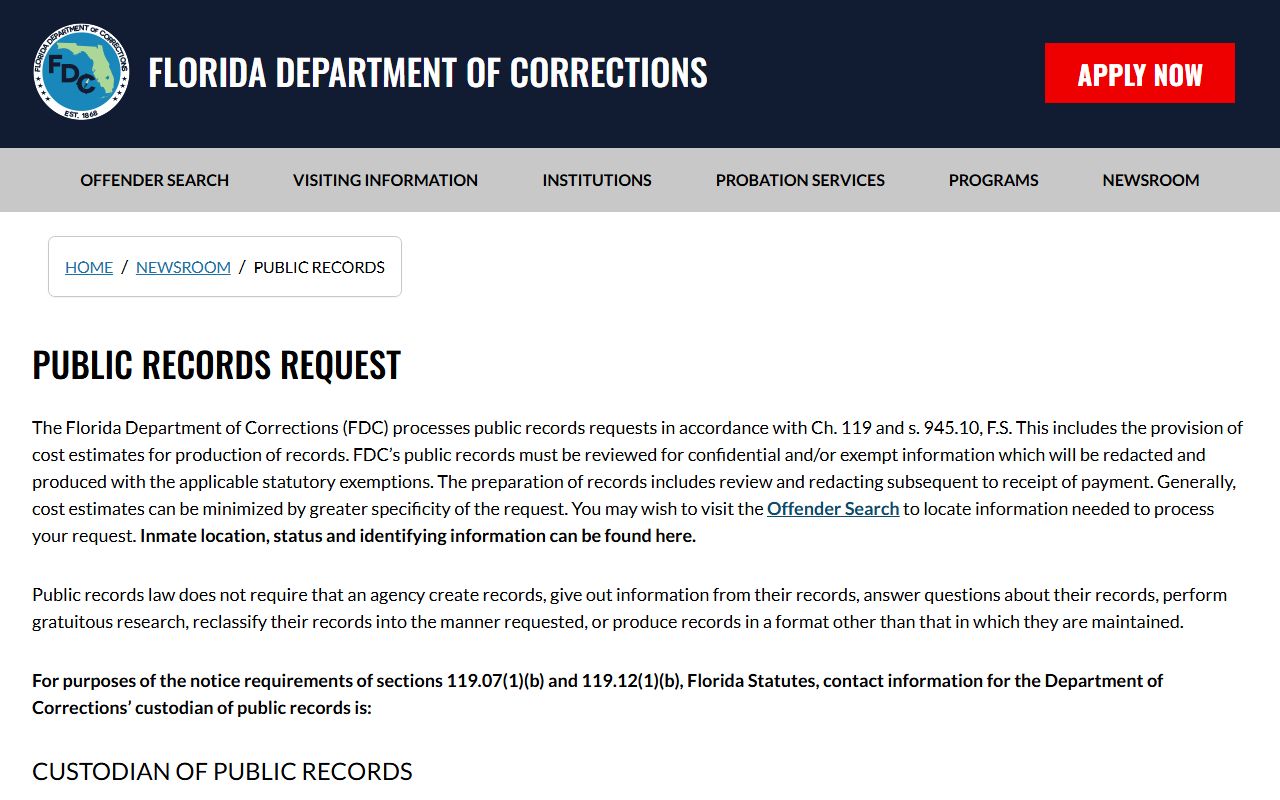
Very broad requests can take longer to fulfill and may become costly for the requester. It helps to narrow your search to specific dates, names, or case numbers.
Florida Public Records Access
Public records are defined as all documents, papers, letters, maps, books, tapes, photographs, films, sound recordings, data processing software, or other material made or received pursuant to law or ordinance or in connection with the transaction of official business by any agency. This broad definition means booking records fall under public access rules. Section 119.01, F.S. establishes that all state, county, and municipal records are open for personal inspection and copying by any person. You do not need to give a reason for your request.
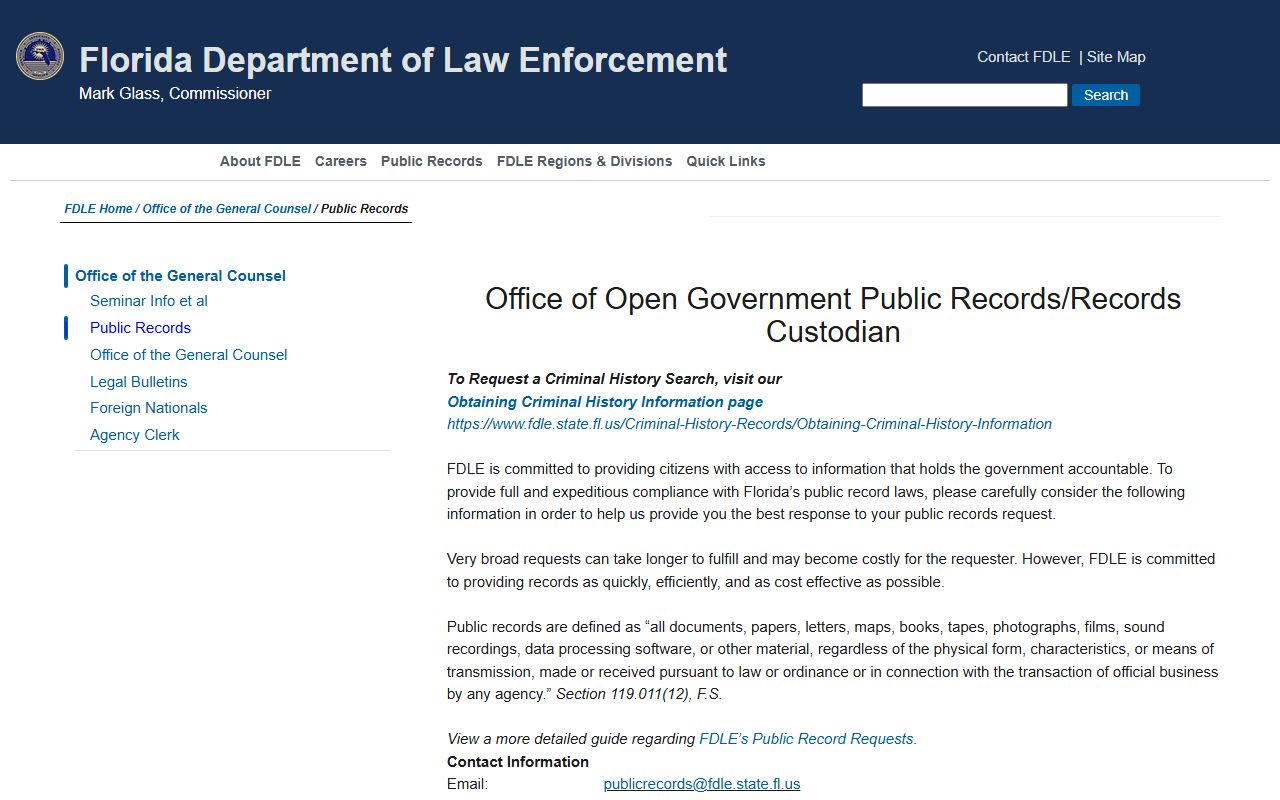
The law covers booking and release data from jails and prisons across Florida. Under Section 119.011, F.S., the time, date, location, and nature of a reported crime, along with the name, sex, age, and address of an arrested person, are explicitly public information. These details are excluded from the definition of confidential criminal intelligence or investigative information, making them public by default.
Section 119.07, F.S. details the process for requesting records. The custodian must provide the records and can charge fees, usually $0.15 per page for copies. Digital records may have different pricing. Some agencies charge for staff time if your request takes extensive research.
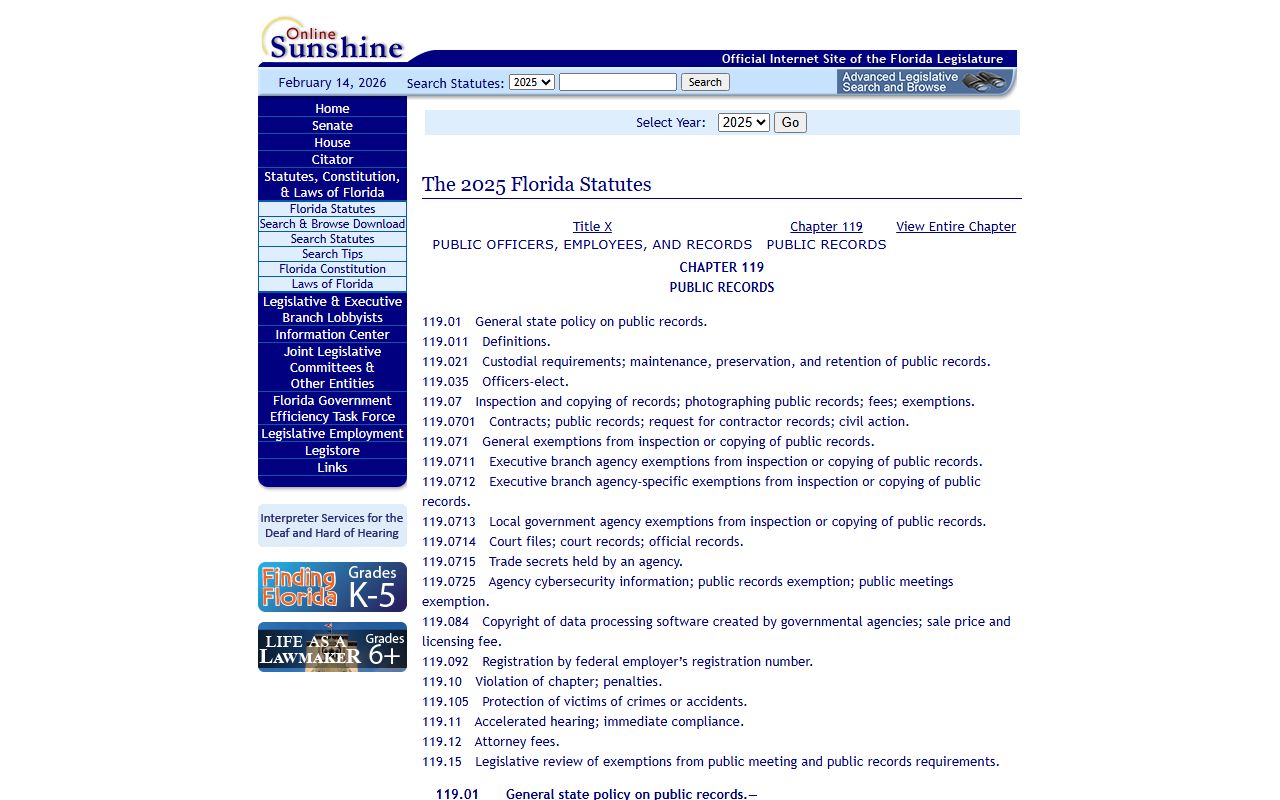
Certain information is exempt from public records under Section 119.071, F.S. This includes active criminal intelligence and investigative information, social security numbers, and certain home addresses of law enforcement officers. However, basic booking data does not fall under these exemptions.
How to Search Records
Florida offers several ways to look up booking and release information. Online databases provide the fastest access. Each county sheriff's office runs its own inmate search portal, and the state corrections system has a separate database for state inmates. You can also request records by phone, email, or mail from the agency that keeps the data you need.
To request a criminal history search, visit the FDLE criminal history information page. This page outlines your options for instant searches, certified searches, and non-certified searches. Instant results come back right away through the online portal. Certified searches take about 5 business days by mail or 6-7 business days if you need a certified copy. Each search requires a $24.00 fee plus a $1.00 credit card processing fee.
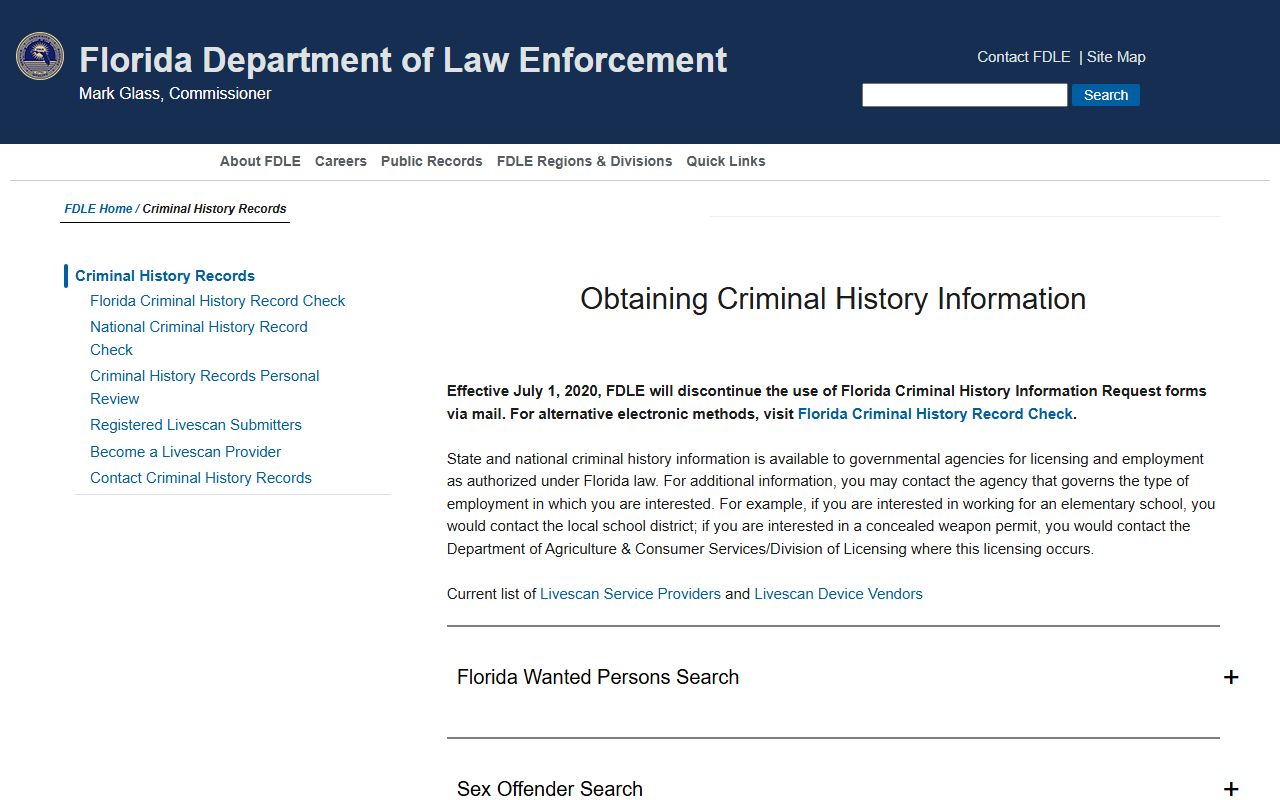
Section 943.053, F.S. authorizes FDLE to provide criminal history information to the public and set fees for these searches. This statute gives FDLE the legal authority to charge for background checks and maintain the central repository of booking and court data.
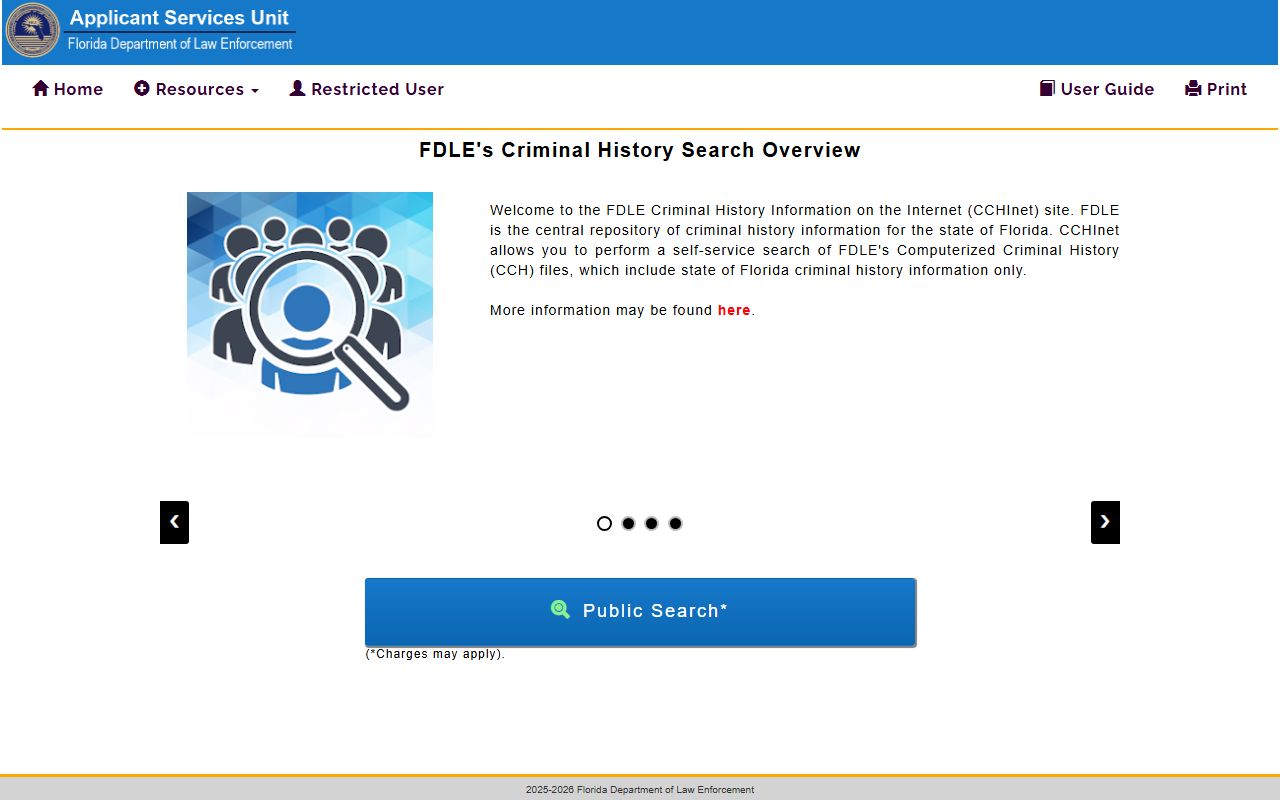
The instant criminal history search portal at cchinet.fdle.state.fl.us is available to the public. You must create an account, pay the fee, and provide the name and date of birth of the person you are searching. Results show booking dates, charges, court outcomes, and incarceration history if any exists in the state database.
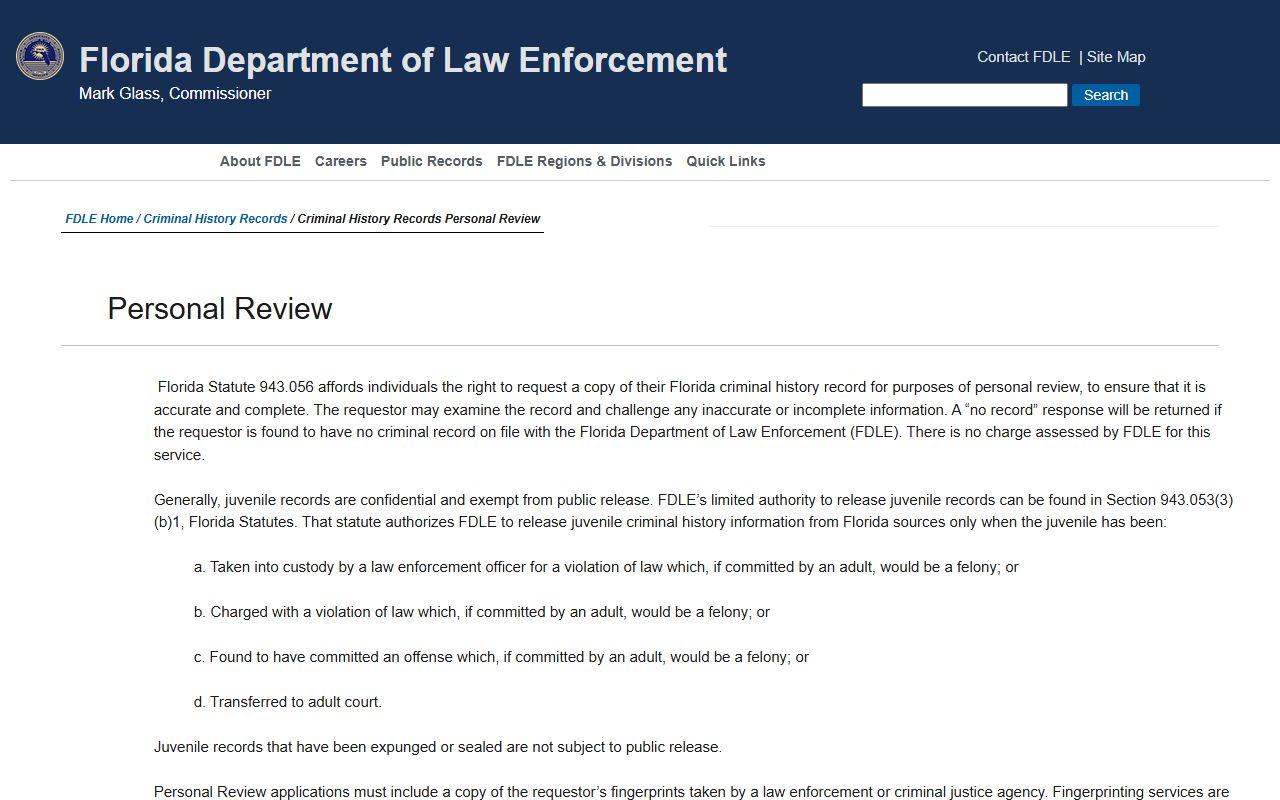
For personal review of your own record, FDLE offers a dedicated service at fdle.state.fl.us/criminal-history-records/personal-review. This lets you see what information appears on your criminal history report. If you find errors, you can request corrections through FDLE's challenge process.
County jails maintain their own booking rosters. These are usually updated daily or even hourly. Most sheriff offices have an online inmate search where you can type in a name and see current inmates and recent releases. The information typically includes booking date, charges, bond amount, and expected release date.
Legal Resources
Florida's public records laws are codified in Chapter 119 of the Florida Statutes. The full text of all Florida laws is available at leg.state.fl.us/Statutes. This official state website lets you browse statutes by chapter or search for specific code sections. It is updated annually when the legislature passes new laws.
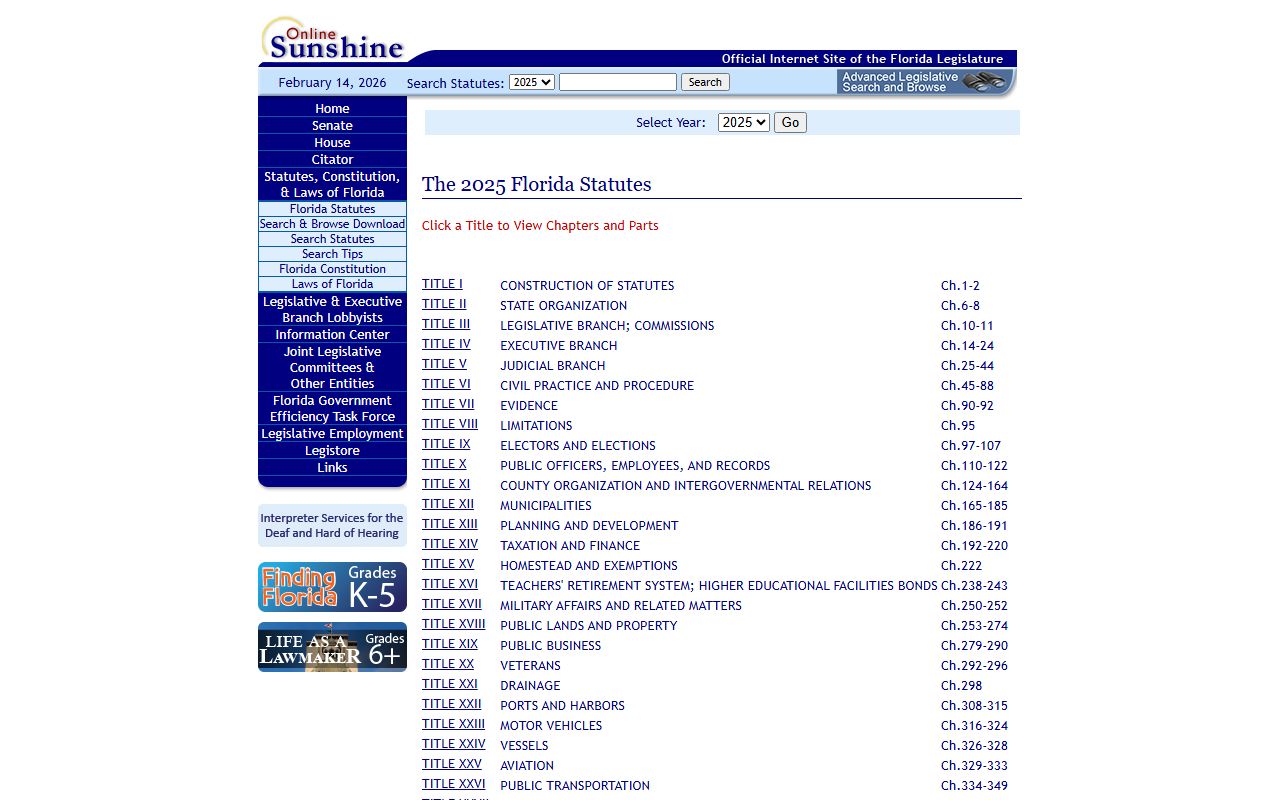
You can reference specific statutes when making public records requests to agencies that seem reluctant to release booking information. Citing Section 119.01, F.S. and Section 119.011, F.S. can help clarify that booking and arrest data are public by law.
If an agency denies your request, you have the right to seek legal remedies. Many legal aid organizations in Florida can help with public records disputes at no cost. The Florida Bar also provides referral services to connect you with attorneys who handle public records cases.
Note: Email addresses are public record under Florida law when submitted to government agencies. If you do not want your email address to be subject to release, contact the office by telephone or in writing instead of email.
Browse by Location
Florida Counties
All 67 counties in Florida keep their own jail records. Sheriff offices manage county jails and process bookings for arrests made by local police departments, state troopers, and federal agents operating in the county. Select a county below to find contact information, online inmate search tools, and public records request procedures.
View All 67 Florida Counties →
Major Cities
Large cities often have their own police departments that make arrests, but booking and detention still happen at the county jail. City police records may be available separately from the county sheriff. Below are Florida's largest cities where booking activity is highest.